
A useful Meta video campaign starts with a clear message, a meaningful conversion goal and a way to learn. AI-assisted editing can help you explore hooks quickly. Original footage gives you something specific to show: your product in use, your team at work and your customers’ actual experiences.
Our proposed approach is simple: test the hook, film the proof, then refine the campaign. Use early creative tests to decide what deserves more production effort. Treat the finished footage as a new test, rather than assuming a successful concept will automatically scale.
Lead campaigns and purchase campaigns need different scorecards
A local service business and an online store usually need different next steps. Someone considering a building project may need a conversation and a quote. Someone buying a product online may be ready to complete checkout. Choose the campaign goal around that journey.
| Campaign | What the video needs to do | What to measure |
|---|---|---|
| Lead generation | Explain the service, show relevant work and make the next conversation feel worthwhile. | Qualified enquiries, booked appointments, sales and the cost of acquiring a customer. |
| Online purchases | Show the product clearly, address an objection and connect the promise to the product page. | Completed purchases, acquisition cost, average order value, returns and contribution after advertising. |
For enquiries, Meta’s Leads objective can support a lead-generation journey. For ecommerce purchases, the Sales objective is the relevant starting point. The conversion location, tracking and optimisation event still need to match the actual business. A cheap click is not the same as a qualified lead, and an add-to-cart is not a sale.
Before testing creative, check the full path. Does the form work? Who follows up? Does the product page explain the offer? Can you reconcile campaign reporting with actual orders? Creative cannot repair a broken checkout or an enquiry that nobody answers.
What makes a hook worth testing?
A hook is the opening idea that earns attention from the right person. It might introduce a familiar problem, show an unexpected product detail or answer a buying question. Its job is to create interest in the offer that follows, not simply generate views.
- Problem: name a situation the customer recognises.
- Demonstration: show the useful detail before explaining it.
- Objection: answer the reason someone hesitates.
- Human perspective: let a founder, specialist or genuine customer explain something specific.
Develop genuinely different ideas before making minor wording changes. Three versions of the same opening are useful for refinement, but they may all depend on the same untested assumption about the customer.
Stage 1: use AI-assisted editing to test the message
AI can help organise interview transcripts, suggest alternate openings, build a rough storyboard, create caption drafts and speed up variations of an edit. Existing licensed footage, product photographs and clips supplied by the business can give an early test something truthful to show.
Human review remains essential. Check product appearance, spoken claims, captions, music rights and the meaning created by the edit. A tool can suggest a compelling sentence without knowing whether your business can substantiate it.
If you use generated visuals, use them where illustration is appropriate. Do not turn a synthetic person into a supposed customer, invent a product result or present a generated scene as footage of completed work. For a physical demonstration, show the actual product.
Write the test question before spending: for example, does opening with the product demonstration attract more viable purchases than opening with the founder’s explanation? Hold the offer and landing experience steady where practical. When you change several things together, treat the result as a test of the whole concept, not proof that one sentence caused the improvement.
Stage 2: film original footage around promising concepts
Once a concept shows useful commercial signals, the shoot has a clearer brief. You know which question to answer, which product detail to demonstrate and which objection needs evidence. That helps direct production effort towards assets the campaign can actually use.
- Record several natural openings. Give the speaker prompts, not just a script to recite.
- Film the evidence. Capture the product, process or service detail the opening promises.
- Gather supporting shots. Include close-ups, wider context and transitions that help the editor explain the story.
- Capture a clear next step. Invite a relevant enquiry or point shoppers towards the product details.
- Plan the crops. Compose for the placements you intend to use so faces, products and captions remain readable.
Original footage brings specificity: the way an actual product works, the language a customer uses and the details of a real workplace. That is the practical value of human video. It does not mean every polished shoot will outperform an inexpensive edit, or that synthetic creative can never work.
Stage 3: let a human editor shape the proof
Editing decides what the audience understands. Which answer belongs first? Does a pause make the speaker feel thoughtful or uncertain? Does the next shot support the claim? Is a caption accurate? Is the demonstration clear without sound?
AI tools can assist with repetitive work, but the final edit needs someone accountable for those decisions. Preserve the meaning of interview answers. Do not splice a customer’s words into a stronger endorsement than they actually gave.
Keep the opening connected to the rest of the video. A dramatic hook that leads into an unrelated sales pitch can produce attention without useful intent. The viewer should understand the product or service, the reason to consider it and what to do next.
Stage 4: test again before increasing spend
The new shoot changes the creative. Retest it against the existing version instead of assuming better production means better results. Use attention measures to diagnose the opening, then judge the campaign against the business outcome.
For a service business, compare lead quality and the route from enquiry to booked work. For an online store, assess the cost of acquiring an order against its contribution after product costs, fulfilment, fees and expected returns. Revenue on its own does not establish profitability.
Agree a test budget, a primary success measure and a review point before launch. Avoid declaring a winner from a handful of clicks or one lucky order. Look for enough relevant conversions to make the decision useful, and recognise that performance can change with audience, offer, season and spend.
How this could work for a single-product brand like AVYSERA
For a single-product brand such as AVYSERA, creative development can stay focused on one product while exploring different buying questions. The product does not need to change for the opening story to change.
- Founder explanation: why the product exists and who it was designed for.
- Product demonstration: show the actual pack and how the product is used, with accurate instructions.
- Buying objection: answer a specific question using information supported by the product details.
Start with a small set of distinct concepts. Record which versions were tested and why a concept was selected. Then film original material around the strongest ideas, keeping approved packaging and claims consistent. This is a proposed application of the process, not a claim about AVYSERA’s recorded campaign results.
A connected video and Meta campaign service
For businesses on the Central Coast, in Sydney and across NSW, the opportunity is to connect creative planning, production and campaign learning. A shoot should produce useful campaign assets, and campaign findings should inform the next shoot.
The service model we are developing brings together an offer and conversion-path review, hook concepts, an agreed creative test, a focused shoot and a library of edited variations. Campaign management, media spend, tracking work and production deliverables should be clearly scoped before the project starts.
It is a process for making better-informed creative decisions, not a promise of a particular revenue result. The first conversation should establish what you sell, who buys it, what evidence you can show and what a commercially useful result looks like.
Frequently asked questions
Should I start with leads or purchases?
Use the customer journey as the guide. If the sale requires an enquiry, assessment or quote, plan a lead-generation campaign with a reliable follow-up process. If customers can buy directly online, plan around completed purchases and the economics of each order.
Can AI help find a winning hook?
AI can help generate and edit candidates. Audience response and business results tell you which candidates are useful. A hook suggested by AI has not been validated until it has been tested in the relevant campaign.
Does real footage always perform better?
No. Real footage lets you show authentic people, products and work, but performance also depends on the message, offer, edit, audience and buying experience. Compare results rather than assuming one production style must win.
How many ads do we need?
There is no universal number. Start with a manageable set of distinct concepts that your budget can meaningfully test. Develop variations of promising concepts and refresh the library as results and customer questions change.
Can you work with footage we already have?
Existing footage can be a useful starting point if you have the rights to use it, the product and claims are current, and the quality suits the intended placements. Review the footage before deciding what needs a new shoot.
Plan your next video campaign
Have a product or service that needs a clearer story? Talk to 3 Points Media about your next campaign. Bring your offer, existing creative and the results you want to improve, and we can discuss a suitable production brief.
Keep reading: video for Meta lead ads, filming useful customer reviews, and turning one shoot into multiple pieces of content.
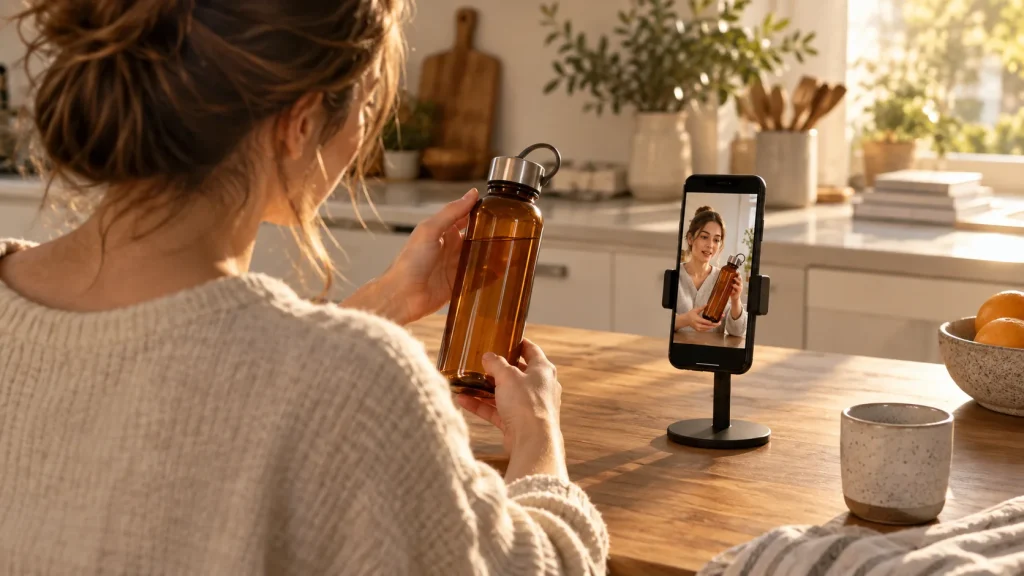
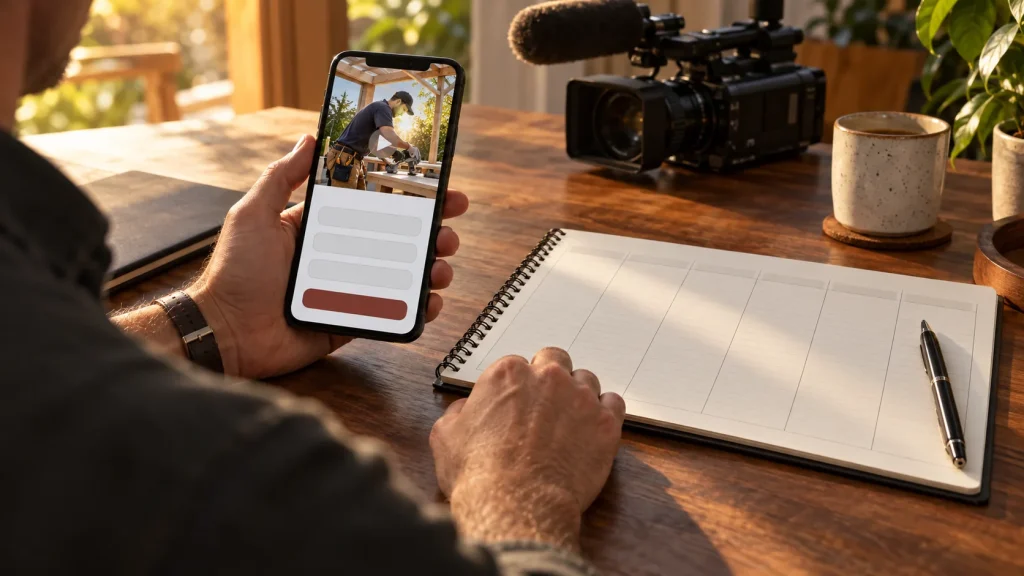
Featured image: AI-generated editorial illustration of video planning.