Most people think they need to book a shoot. A surprising number already have the footage — it is sitting in a phone, a GoPro, or a folder of drone files nobody ever cut. What they need is an editor.
The difference
A videographer captures footage. An editor turns footage into a video. They are different skills, and plenty of people are good at one and not the other. Some of the best-shot footage we receive comes from clients who cannot cut it, and some of the worst comes from professional shoots that were never planned with an edit in mind.
When you hire a full-service studio you get both, and the two inform each other — the person shooting knows what the edit will need. But if you already have the material, paying for a shoot you do not need is money down the drain.
When your own footage is enough
It is enough more often than you would think. The test is not whether it looks cinematic. It is whether it is usable:
- Reasonably steady — a phone held with two hands is fine, a phone waved around is not
- In focus and adequately lit — daylight through a window beats most cheap lighting
- Sound that can be heard — for anything with speech, this matters more than the picture
- Enough of it — a two-minute video needs more than two minutes of footage
Trades and property businesses are usually sitting on a lot of this. Job-site clips, before-and-afters, walkthroughs recorded for a client, drone flights over a finished build. Individually they are nothing. Cut together with a structure and captions, they are a month of content.
What editing actually fixes
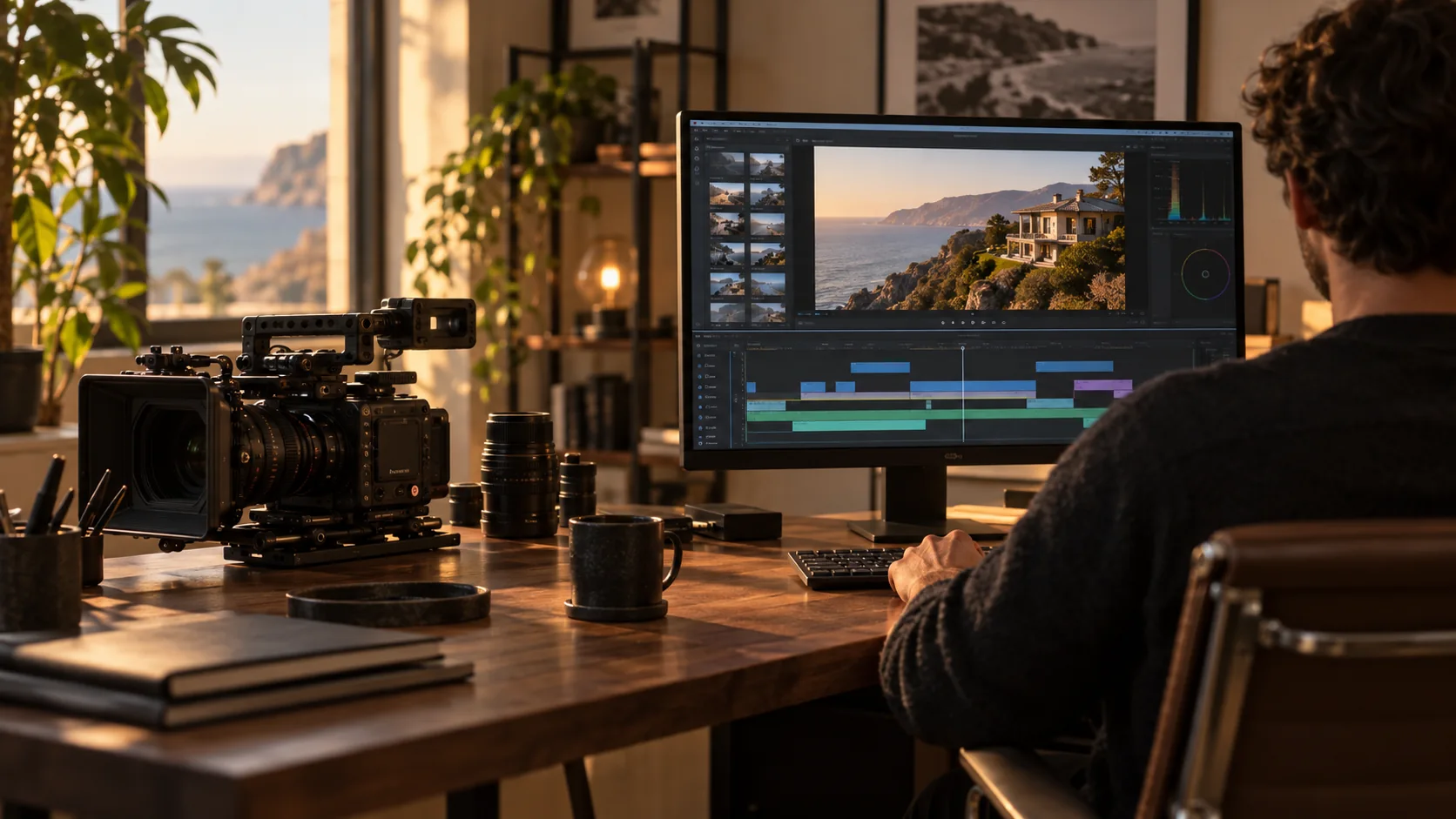
A good edit does far more than trim the boring bits. It decides the order, which is the single biggest factor in whether someone keeps watching. It fixes colour so clips from different days match. It cleans sound, levels it against music, and adds captions for the majority of people watching with the volume off. It adds a hook in the first two seconds and a reason to keep watching after that.
What editing cannot fix: footage that is out of focus, audio that is unintelligible, or a shoot that never captured the thing the video is supposed to show. We will tell you if that is the case before you spend anything.
How to hand footage over
Share a Google Drive or Dropbox folder. Keep the original files rather than exporting them through a messaging app, which compresses them badly. Add a short note about what the video is for and who it is talking to. That is genuinely all we need.
Our Starter package is built for exactly this: you share a folder each month, we cut four reels from it and drop the finished edits back in.
What edit-only work costs
A single reel cut from supplied footage typically runs $150 to $400. A longer piece — a two to four-minute video assembled from a folder of clips — sits around $500 to $1,200 depending on how much material there is and how much needs fixing. Monthly edit-only arrangements start at $1,000 for four videos.
That is a fraction of the cost of a shoot, which is the point. If the footage exists, use it.
Frequently asked questions
Can you edit phone footage?
Yes. Modern phones shoot perfectly usable video. The limitation is usually sound and stability, not resolution.
How do I know if my footage is good enough?
Send a few clips before you book anything. It takes us five minutes to tell you honestly, and it costs you nothing.
Do you add music and captions?
Both, as standard. Licensed music from our library or your own if you have it, and burned-in captions plus a clean version.
Will you tell me if a shoot is a better idea?
Yes. Sometimes what is in the folder will not make the video you want, and the honest answer is a half-day shoot. We would rather say so than deliver something mediocre.